Articles by "Indo Pak History"

List of Governor Generals and Viceroys of India

Governor Generals of India

Lord William Bentinck (1828 – 1835):

• Carried out the social reforms like Prohibition of Sati (1829) and elimination of thugs (1830).
• Made English the Medium of higher education in the country (After the recommendations of Macaulay).
• Suppressed female infanticide and child sacrifice.
• Charter Act of 1833 was passed; made him the first Governor General of India. Before him, the designation was Governor General of Bengal.

Sir Charles Metcalfe (1835 – 1836): Abolished all restrictions on vernacular press (called Liberator of the Press).
Lord Auckland (1836 – 1842): The most important event of his reign was the First Afghan War, which proved to be a disaster for the English.

Lord Ellenborough (1842 – 1844)
Lord Hardinge I (1844 – 1848)

Lord Dalhousie (1848 – 1856):

• Opened the first Indian Railway in 1853 (from Bombay to Thane).
• Laid out the telegraph lines in 1853 (First was from Calcutta to Agra).
• Introduced the Doctrine of Lapse and captured Satara (1848), Jaipur and Sambhalpur (1849), Udaipur (1852), Jhansi (1853) and Nagpur (1854).
• Established the postal system on the modern lines through the length and breadth of the country, which made communication easier.
• Started the Public Works Department. Many bridges were constructed and the work on Grand Trunk Road was started. The harbors of Karachi, Bombay and Calcutta were also developed.
• Made Shimla the summer capital.
• Started Engineering College at Roorkee.
• Encouraged science, forestry, commerce, mineralogy and industry.
• In 1854, “Wood’s Dispatch’ was passed, which provided for the properly articulated system of education from the primary school to the university.
• Due to Ishwar Chandra Vidyasagar’s efforts, remarriage of widows was legalized by Widow Remarriage Act, 1856).

Viceroys Of India

Lord Canning (1856 – 1862):

• The last Governor General and the first Viceroy.
• Mutiny took place in his time.
• On Nov, 1858, the rule passed on to the crown.
• Withdrew Doctrine of Lapse.
• The Universities of Calcutta, Bombay and Madras were established in 1857.
• Indian Councils Act was passed in 1861.

Lord Elgin (1862 – 1863)

Lord Lawrence (1864 – 1869):
• Telegraphic communication was opened with Europe.
• High Courts were established at Calcutta, Bombay and Madras in 1865.
• Expanded canal works and railways.
• Created the Indian Forest department.

Lord Mayo (1869 – 1872):

• Started the process of financial decentralization in India.
• Established the Rajkot college at Kathiarwar and Mayo College at Ajmer for the Indian princes.
• For the first time in Indian history, a census was held in 1871.
• Organised the Statistical Survey of India.
• Was the only Viceroy to be murdered in office by a Pathan convict in the Andamans in 1872.

Lord Northbrook (1872 – 1876):

Lord Lytton (1876 – 1880):
• Known as the Viceroy to reverse characters.
• Organised the Grand ‘Delhi Durbar’ in 1877 to decorate Queen Victoria with the title of ‘Kaiser – I – Hind’.
• Arms Act(1878) made it mandatory for Indians to acquire license for arms.
• Passed the infamous Vernacular Press Act (1878).

Lord Ripon (1880 – 1884):

• Liberal person, who sympathized with Indians.
• Repeated the Vernacular Press Act (1882)
• Passed the local self – government Act (1882)
• Took steps to improve primary & secondary education (on William Hunter Commission’s recommendations).
• The I Factory Act, 1881, aimed at prohibiting child labour.
• Passed the libert Bill (1883) which enabled Indian district magistrates to try European criminals. But this was withdrawn later.

Lord Dufferin (1884 – 1888):

• Indian National Congress was formed during his tenure.

Lord Lansdowne (1888 – 1894):
• II Factory Act (1891) granted a weekly holiday and stipulated working hours for women and children, although it failed to address concerns such as work hours for men.
• Categorization of Civil Services into Imperial, Provincial and Subordinate.
• Indian Council Act of 1892 was passed.
• Appointment of Durand Commission to define the line between British India and Afghanistan.

Lord Elgin II (1894 – 1899):

• Great famine of 1896 – 1897. Lyall Commission was appointed.

Lord Curzon (1899 – 1905):

• Passed the Indian Universities Act (1904) in which official control over the Universities was increased.
• Partitioned Bengal (October 16, 1905) into two provinces 1, Bengal (proper), 2.East Bengal & Assam.
• Appointed a Police Commission under Sir Andrew Frazer to enquire into the police administration of every province.
• The risings of the frontier tribes in 1897 – 98 led him to create the North Western Frontier Province(NWFP).
• Passed the Ancient Monuments Protection Act (1904), to restore India’s cultural heritage. Thus the Archaeological Survey of India was established.
• Passed the Indian Coinage and Paper Currency Act (1899) and put India on a gold standard.
• Extended railways to a great extent.

Lord Minto (1905 – 1910):

• There was great political unrest in India. Various acts were passed to curb the revolutionary activities. Extremists like Lala Laipat Rai and Ajit Singh (in May, 1907) and Bal Gangadhar Tilak (in July, 1908) were sent to Mandalay jail in Burma.
• The Indian Council Act of 1909 or the Morley – Minto Reforms was passed.

Lord Hardinge (1910 – 1916):

• Held a durbar in dec, 1911 to celebrate the coronation of King George V.
• Partition of Bengal was cancelled (1911), capital shifted from Calcutta to Delhi (1911).
• A bomb was thrown at him; but he escaped unhurt (Dec 23, 1912).
• Gandhiji came back to India from S.Africa (1915).
• Annie Besant announced the Home Rule Movement.

Lord Chelmsford (1916 – 1921):

• August Declaration of 1917, whereby control over the Indian government would be gradually transferred to the Indian people.
• The government of India Act in 1919 (Montague – Chelmsford reforms) was passed.
• Rowlatt Act of 1919; Jallianwala Bagh Massacre (April 13, 1919).
• Non – Cooperation Movement.
• An Indian Sir S.P.Sinha was appointed the Governor of Bengal.
• A Women’s university was founded at Poona in 1916.
• Saddler Commission was appointed in 1917 to envisage new educational policy.
Lord Reading (1921 – 1926):
• Rowlatt act was repeated along with the Press act of 1910.
• Suppressed non-cooperation movement.
• Prince of Wales visited India in Nov.1921.
• Moplah rebellion (1921) took place in Kerala.
• Ahmedabad session of 1921.
• Formation of Swaraj Party.
• Vishwabharati University started functioning in 1922.
• Communist part was founded in 1921 by M.N.Roy.
• Kakory Train Robbery on Aug 9, 1925.
• Communal riots of 1923 – 25 in Multan, Amritsar, Delhi, etc.
• Swami Shraddhanand, a great nationalist and a leader of the Arya Samajists, was murdered in communal orgy.

Lord Irwin (1926 – 1931):

• Simon Commission visited India in 1928.
• Congress passed the Indian Resolution in 1929.
• Dandi March (Mar 12, 1930).
• Civil Disobedience Movement (1930).
• First Round Table Conference held in England in 1930.
• Gandhi – Irwin Pact (Mar 5, 1931) was signed and Civil Disobediance Movement was withdrawn.
• Martydorm of Jatin Das after 64 days hunger strike (1929).

Lord Willington (1931 – 1936):

• Second Round Table conference in London in 1931.
• On his return Gandhiji was again arrested and Civil Disobedience Movement was resumed in Jan 1932.
• Communal Awards (Aug 16, 1932) assigned seats to different religious communities. Gandhiji went on a epic fast in protest against this division.
• Third Round Table conference in 1932.
• Poona Pact was signed.
• Government of India Act (1935) was passed.

Lord Linlithgow (1936 – 1944):

• Govt. of India Act enforced in the provinces. Congress ministries formed in 8 out of 11 provinces. They remained in power for about 2 years till Oct 1939, when they gave up offices on the issue of India having been dragged into the II World War. The Muslim League observed the days as ‘Deliverance Say’ (22 December)
• Churchill became the British PM in May, 1940. He declared that the Atlantic Charter (issued jointly by the UK and US, stating to give sovereign rights to those who have been forcibly deprived of them) does not apply to India.
• Outbreak of World War II in 1939.
• Cripps Mission in 1942.
• Quit India Movement (August 8, 1942).

Lord Wavell (1944 – 1947):

• Arranged the Shimla Conference on June 25, 1945 with Indian National Congress and Muslim League; failed.
• Cabinet Mission Plan (May 16, 1946).
• Elections to the constituent assembly were held and an Interim Govt. was appointed under Nehru.
• First meeting of the constituent assembly was held on Dec. 9, 1946.

Lord Mountbatten (Mar.1947 – Aug.1947):

• Last Viceroy of British India and the first Governor General of free India.
• Partition of India decided by the June 3 Plan.
• Indian Independence Act passed by the British parliament on July 4, 1947, by which Pakistan and India became independent on August 14 and 15, 1947.

History of rulers of India from 1 to 2018


تاریخِ حکمرانانِ ھندوستان
غوری سلطنت سے نریندر مودی تک

غوری سلطنت
1 = 1193 محمد غوری
2 = 1206 قطب الدین ایبک
3 = 1210 آرام شاہ
4 = 1211 التتمش
5 = 1236 ركن الدين فیروز شاہ
6 = 1236 رضیہ سلطان
7 = 1240 معیزالدین بہرام شاہ
8 = 1242 الہ دين مسعود شاہ
9 = 1246 ناصرالدين محمود
10 = 1266 غیاث الدین بلبن
11 = 1286 رنگ كھشرو
12 = 1287 مذدن كےكباد
13 = 1290 شمس الدین كےمرس
غوری سلطنت اختتام
(دور حکومت -97 سال تقریبا)

 خلجي سلطنت

1 = 1290 جلال الدین فیروز خلجی
2 = 1292 الہ دین خلجی
4 = 1316 شھاب الدین عمر شاہ
5 = 1316 قطب الدین مبارک شاہ
6 = 1320 ناصر الدین خسرو شاہ
خلجی سلطنت اختتام
(دور حکومت -30 سال تقریبا)


 تغلق سلطنت

1 = 1320 غیاث الدین تغلق (اول)
2 = 1325 محمد بن تغلق (دوم)
3 = 1351 فیروز شاہ تغلق
4 = 1388 غیاث الدین تغلق (دوم)
5 = 1389 ابوبکر شاہ
6 = 1389 محمد تغلق (سوم)
7 = 1394 الیگزینڈر شاہ (اول)
8 = 1394 ناصر الدین شاہ (دوم)
9 = 1395 نصرت شاہ
10 = 1399 ناصرالدين محمدشاہ (دوم)
11 = 1413 دولت شاه
تغلق سلطنت اختتام
(دور حکومت -94 سال تقریبا)

 سعید سلطنت

1 = 1414 كھجر خان
2 = 1421 معیزالدین مبارک شاہ (دوم)
3 = 1434 محمد شاہ(چہارم)
4 = 1445 الہ دين عالم شاہ
سعید سلطنت اختتام
(دور حکومت -37 سال تقریبا)
 
لودھی سلطنت

1 = 1451 بهلول لودھی
2 = 1489 الیگزینڈر لودھی (دوم)
3 = 1517 ابراہیم لودھی
لودھی سلطنت اختتام
(دور حکومت -75 سال تقریبا) 
مغلیہ سلطنت

1 = 1526 ظہیرالدين بابر
2 = 1530 ہمایوں
مغلیہ سلطنت اختتام

 
سوري سلطنت

1 = 1539 شیر شاہ سوری
2 = 1545 اسلام شاہ سوری
3 = 1552 محمود شاہ سوری
4 = 1553 ابراہیم سوری
5 = 1554 پرویز شاہ سوری
6 = 1554 مبارک خان سوری
7 = 1555 الیگزینڈر سوری
سوری سلطنت اختتام
(دور حکومت -16 سال تقریبا)

مغلیہ سلطنت دوبارہ

1 = 1555 همايوں(دوبارہ گدی نشین)
2 = 1556 جلال الدين اکبر
3 = 1605 جہانگیر سلیم
4 = 1628 شاہ جہاں
5 = 1659 اورنگزیب
6 = 1707 شاہ عالم (اول) 
7 = 1712 بهادر شاہ
8 = 1713 پھاروكھشير
9 = 1719 ريپھد راجت
10 = 1719 ريپھد دولا
11 = 1719 نےكشييار
12 = 1719 محمود شاہ
13 = 1748 احمد شاہ
14 = 1754 عالمگیر
15 = 1759 شاہ عالم
16 = 1806 اکبر شاہ
17 = 1837 بہادر شاہ ظفر
مغلیہ سلطنت اختتام
(دور حکومت -315 سال تقریبا)

 برطانوی راج

1 = 1858 لارڈ كینگ
2 = 1862 لارڈ جیمز بروس یلگن
3 = 1864 لارڈ جهن لورےنش
4 = 1869 لارڈ رچارڈ میو
5 = 1872 لارڈ نورتھبك
6 = 1876 لارڈ ایڈورڈ لٹین
7 = 1880 لارڈ جيورج ریپن
8 = 1884 لارڈ ڈفرین
9 = 1888 لارڈ هنني لےسڈون
10 = 1894 لارڈ وکٹر بروس یلگن
11 = 1899 لارڈ جيورج كرجھن
12 = 1905 لارڈ گلبرٹ منٹو
13 = 1910 لارڈ چارلس هارڈج
14 = 1916 لارڈ فریڈرک سےلمسپھورڈ
15 = 1921 لارڈ ركس ايجےك رڈيگ
16 = 1926 لارڈ ایڈورڈ ارون
17 = 1931 لارڈ پھرمےن وےلگدن
18 = 1936 لارڈ اےلےكجد لنلتھگو
19 = 1943 لارڈ اركبالڈ وےوےل
20 = 1947 لارڈ ماؤنٹ بیٹن

برطانوی سامراج کا اختتام

🇮🇳بھارت، وزرائے اعظم🇮🇳

1 = 1947 جواہر لال نہرو
2 = 1964 گلزاری لال نندا
3 = 1964 لال بهادر شاستری
4 = 1966 گلزاری لال نندا
5 = 1966 اندرا گاندھی
6 = 1977 مرارجی ڈیسائی
7 = 1979 چرن سنگھ
8 = 1980 اندرا گاندھی
9 = 1984 راجیو گاندھی
10 = 1989 وشوناتھ پرتاپسه
11 = 1990 چندرشیکھر
12 = 1991 پيوينرسه راؤ
13 = 1992 اٹل بہاری واجپائی
14 = 1996 چڈيدے گوڑا
15 = 1997 ايل كےگجرال
16 = 1998 اٹل بہاری واجپائی
17 = 2004 منموھن سنگھ 
18 = 2014 نریندر مودی


764 سالوں تک مسلم بادشاھت ہونے کے باوجود بھی ہندو، ھندوستان میں باقی ہیں. مسلمان حکمرانوں نے کبھی بھی ان کے ساتھ ناروا سلوک نہیں کیا. اور ہندوؤں کو اب تک 100 سال بھی نہیں ہوئے اور یہ مسلمانوں کو ختم کرنے کی بات کرتے ہیں

I -INTRODUCTION of Dam

Dam, structure that blocks the flow of a river, stream, or other waterway. Some dams divert the flow of river water into a pipeline, canal, or channel. Others raise the level of inland waterways to make them navigable by ships and barges. Many dams harness the energy of falling water to generate electric power. Dams also hold water for drinking and crop irrigation, and provide flood control. The oldest known human-made dams were built more than 5,000 years ago in arid parts of the Middle East to divert river water to irrigate crops. Today there are more than 500,000 dams worldwide. The vast majority of these are small structures less than 3 m (10 ft) tall. Engineers regard dams that measure more than 15 m (50 ft) high as large dams. About 40,000 large dams exist in the world today.

The construction on Diamer-Bahsha dam is about to kick off. With Kalbabagh dam buried under the heavy dust of political controversies the Government of Pakistan has left with no other alternative except going for the Diamer-Basha dam to meet its growing energy needs. 

Necessary is its construction for the ailing economy of Pakistan, as being built on the river which is the life line for this country, the dam is not free from a string of controversies and issues either.

The first controversy aroused when the dam’s nomenclature surfaced with a name quite alien to the people-Bhasha, a small part of the Koshistan District in KPK. It was after much hue and cry on the par of the populace of GB that government condescended to incorporate a local name, Diamer, thus changing it to Diamer-Bhasha dam.

Irrigated agricultural is the backbone of Pakistan’s economy. At the same time with word’s fastest
growing population estimated to touch 150 million marks by the turn of the century, there is a dire need to increase agricultural production. If nothing is done, there would e approximately 25% shortfall in food grain requirements by the year 2000, Judging from current (1997) two million tones import of wheat, by that time, Pakistan could be one of the major food deficit countries in the world.

This article by Ann-Kathrin Schneider has first appeared on the website of the Heinrich Boell Foundation in September 2008.

Men of all ages, most of them wearing dashing black moustaches and white cotton caps that contrast
with their pitch dark eyes and brown skin, pass each other on the narrow lanes of this market, just north of the Pakistani capital Islamabad. Some appear to have no reason to be here, leaning leisurely against graffiti-soaked house walls, waiting for something to catch their interest. Others are hard at work, exposing sweaty muscular torsos as they unload three, four or five wooden boxes filled with yellow mangoes from a truck onto their shoulders. The weight of the boxes challenges their balance – but not a mango is spilled.

NAMAL DAM


Namal Lake is located in one corner of the Namal valley in Mianwali, Punjab, Pakistan. This lake was created when Namal Dam was constructed in 1913. Namal Dam is situated some 32 km from Mianwali city. Namal Lake spread over 5.5 sq km, in Namal valley. There are mountains on its western and southern sides. On the other two sides are agricultural areas. NAMAL dam is situated some 32 KM from Mianwali city. This dam is very old. British Government constructed it. When Mianwali became District then the district government buildings were constructed using water stored in Namal Lake from this Namal Dam. In 1913, British engineers, to meet the scarcity of irrig ation and drinking water, built a dam on this lake and from here they irrigated lands up to Mianwali city. But with the passage of time and construction of Thal Canal and installation of tube wells, its utility of water squeezed up to some limit. The gates of the dam are repaired by the irrigation department regularly but without enthusiasm. The hill torrents and rains fill the Namal Lake round the year. Due to a drought -like situation in the country, this lake dried up last year, which is the first incident of its kind during the last 100 years, said one of the senior inhabitants of this area.

KANPUR DAM

Khanpur Dam is a dam located on the Haro River near the town of Khanpur, about 25 miles from Islamabad, Pakistan. It forms Khanpur Lake, a reservoir which supplies drinking water to Islamabad and Rawalpindi and irrigation water to many of the agricultural and industrial areas surrounding the cities. The dam was named from the former Kha npur village, which was
submerged by the reservoir, so a new Khanpur town has been built downstream of the Dam. The dam was completed in 1983 after a 15-year construction period believed to have cost Rs. 1,352 million. It is 167 feet high and stores 110,000 acre-feet of water.


TANDA DAM (RAMSAR SITE)

Tanda Dam is lcated in Kohat District, North-West Frontier Province, Pakistan. The site comprises a small water storage area in semi-arid hills in the catchments of the Kohat Toi River. Although most of the shoreline is steep, stony and devoid of aquatic vegetation, at the west end there are some areas of gently shelving muddy shores with a small amount of emergent vegetation.

Diamer-Bhasha Dam

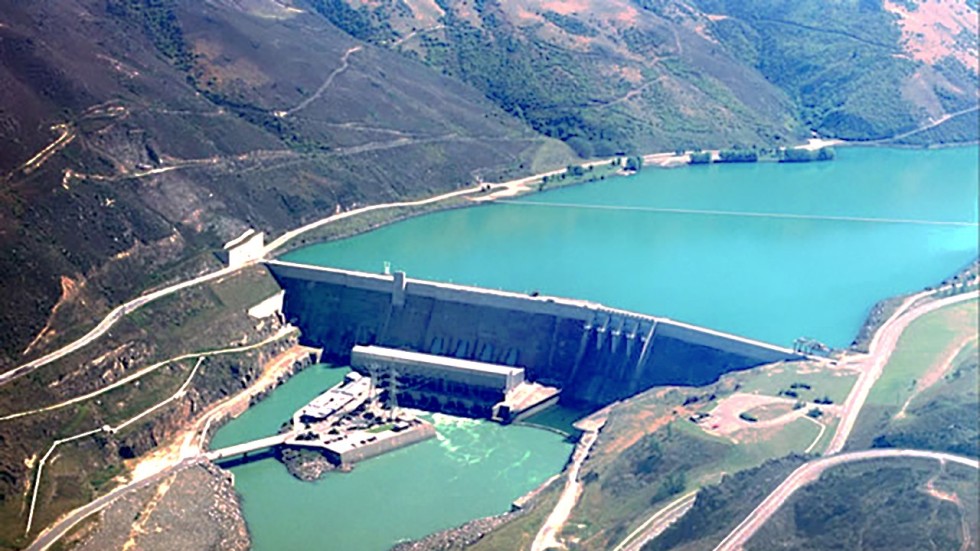
Diamer-Bhasha Dam is the name of a dam that has been planned in the Northern Areas of Pakistan on the River Indus. It is located about 314 km upstream of Tarbela Dam and about 165 km downstream of Gilgit. The dam is expected to create a large reservoir with a gross capacity of 7.3 million-acre feet (9 km³) submerging large tracts of land in the Diamer district. The dam is supposed to have a power generation capacity of 3.360 megawatts and is expected to considerable ease up the skewed hydro to thermal power generation ratio in Pakistan. It is expected that the detailed drawings of the dam would be completed by March 2008, immediately after which construction work shall begin.


Subsidiary Alliances

These were the alliances made with local princes. According to the terms, the real matters of the land were given in hand of British in return of British protection and money. Furthermore the ruler could stay on throne though only as a British puppet. In this British was able to reinforce its control over India.

Battle of Plessey
The French encouraged the Nawab of Bengal to attack the EIC base at Calcutta. Further more the Fortification of British post on Calcutta was also against agreement with the Nawab of Bengal and so Siraj-ud-Daulah marched over Calcutta and seized Fort William and locked the British residents in a small room. 23 out of 65 people died. This incident is known as Black Hole Incident and it led to Battle of Plessey. Robert Clive succeeded in defeating Siraj Ud Daula by bribing one of his key men Mir Jaffer. Jafar was made the new Nawab of Bengal and Bengal came under EIC’s rule.

What was the East India Company?

The East India Trading Company was a Company set up by British Merchants to trade with India. Its first port was set up at Surat. The East India Company gained power and created a private army. It played a major role in establishing British Reign in the subcontinent. The East India Company was finished through India Act 1858 after War of Independence.

Author

MKRdezign

MathJax

Contact Form

Name

Email *

Message *

Powered by Blogger.
Javascript DisablePlease Enable Javascript To See All Widget